From idea to a working concept
Evondos was born from founder Mika Apell’s childhood memories of visiting his grandmother in North Karelia, where he first witnessed the challenges of home pharmacotherapy. Moved by the lack of personal attention caregivers could give while focusing on pill dispensing, Mika later turned these early impressions into action during his studies at the University of Turku.
What started as a student project in 2007 grew into a dedicated mission to improve elderly care, resulting in the first medicine dispenser prototype in 2009 and a fully functioning service by 2014.
Today, Evondos supports care professionals by automating medicine dispensing—freeing up time for meaningful, human-centered care.
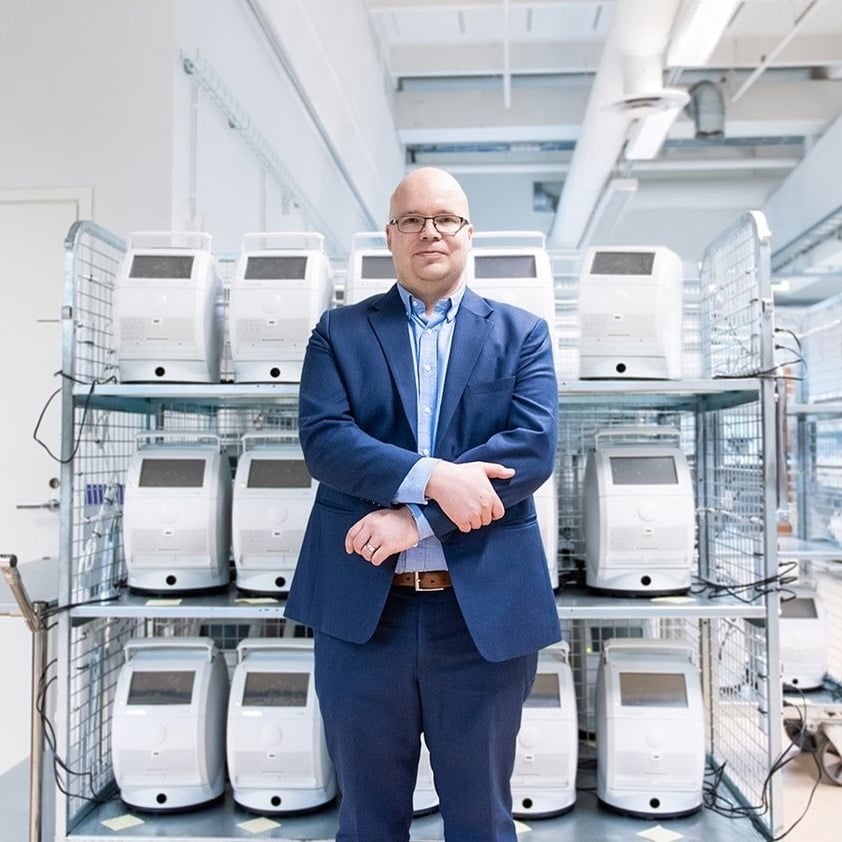
“Our story begins with my childhood experiences of spending a lot of time at my granny’s home in North Karelia, where I first encountered the problems of home pharmacotherapy. Even though I understood very little about what was happening at that time, the experience left a very strong impression and greatly influenced my own subsequent decisions,” explains Mika Apell, who founded Evondos and originally conceived its business idea.
“I remember when the nurse came to refill granny’s red pill organizer. My granny was a garrulous North Karelian who would always be eager to chat, offering coffee and buns while the nurse was trying to focus on filling the pill organizer correctly. The nurse would nevertheless concentrate on arranging the medication, giving only the briefest of responses that were often reduced to mere nods of the head. I also found some pills on the floor once, but luckily my mother noticed in time to stop me from eating them.”
“Granny deserved more attention and human interaction, but instead her nurses had to pay close attention to arranging her medication correctly and avoiding mistakes. Even then some human errors occurred occasionally,” Mika continues.
/Hero%20images/medicine-dispenser-story-of-evondos-hero-1920px.jpeg?width=888&height=888&name=medicine-dispenser-story-of-evondos-hero-1920px.jpeg)
“During adult education at the University of Turku in 2007, we teamed up with other students for a project. Shared experiences of pharmacotherapy problems led to the idea of helping the daily lives of senior citizens and their carers, with the team even developing the first version of a medicine dispenser in 2009.”
It still took years of painstaking and persistent work to develop the medicine-dispensing robot from a mere early prototype into a working service concept.
Vill du veta mer?
Många kommuner och regioner har redan upptäckt fördelarna med läkemdedelsautomater. Vi berättar gärna mer om vilken skillnad välfärdsteknik kan göra, både för användare och för vårdorganisationer.